

As a supplier of 12V RV Battery, I often get asked a common question: "Can I use a 12V RV battery to power a microwave?" This is a valid query, especially for RV enthusiasts who want to enjoy the convenience of a hot meal on the go. In this blog post, I'll delve into the technical aspects of using a 12V RV battery to power a microwave, the challenges involved, and some alternative solutions.
Understanding the Basics of Power Requirements
Before we can determine whether a 12V RV battery can power a microwave, it's essential to understand the power requirements of both the battery and the microwave. A 12V RV battery, as the name suggests, operates at a voltage of 12 volts. The power it can deliver is measured in ampere - hours (Ah). For example, a 100Ah 12V RV battery can theoretically deliver 1 amp of current for 100 hours, or 100 amps for 1 hour.
On the other hand, a microwave is a high - power appliance. Most household microwaves have a power rating ranging from 600 to 1200 watts. The power (P) in an electrical circuit is calculated using the formula P = V × I, where V is the voltage and I is the current.
If we assume a microwave with a power rating of 800 watts and we want to power it using a 12V system, we can calculate the current (I) required using the formula I = P / V. So, I = 800W / 12V ≈ 66.7 amps. This is a very high current draw, and most 12V RV batteries are not designed to handle such a large current continuously.
The Challenges of Powering a Microwave with a 12V RV Battery
High Current Draw
As mentioned earlier, the high current draw required by a microwave can quickly deplete a 12V RV battery. Most 12V RV batteries have a limited capacity and cannot supply a large amount of current for an extended period. Continuous high - current draw can also damage the battery, reducing its lifespan and performance.
Inverter Requirements
Since most microwaves are designed to operate on 120V AC (alternating current), while 12V RV batteries provide DC (direct current), an inverter is required to convert the DC power from the battery to AC power. Inverters are not 100% efficient, and there are losses associated with the conversion process. A high - power inverter capable of handling the power requirements of a microwave is also relatively expensive and may add significant weight to the RV.
Battery Capacity
Even if you have a large - capacity 12V RV battery, the capacity may not be sufficient to power a microwave for an extended period. For example, a 200Ah 12V battery has a total energy capacity of 200Ah × 12V = 2400 watt - hours. If we assume a 1000 - watt microwave and an inverter efficiency of 90%, the actual power drawn from the battery would be approximately 1000W / 0.9 ≈ 1111W. So, the battery would only be able to power the microwave for about 2400Wh / 1111W ≈ 2.16 hours.
Alternative Solutions
Using a Larger Battery Bank
One solution is to use a larger battery bank. By connecting multiple 12V RV batteries in parallel, you can increase the overall ampere - hour capacity of the battery system. However, this also increases the cost, weight, and complexity of the system.
Upgrading to a 24V RV Battery
A 24V RV battery system can reduce the current draw compared to a 12V system. Using the same 800 - watt microwave example, if we use a 24V system, the current required would be I = 800W / 24V ≈ 33.3 amps, which is half of the current required in a 12V system. This lower current draw is easier for the battery to handle and can reduce the stress on the battery and the inverter.

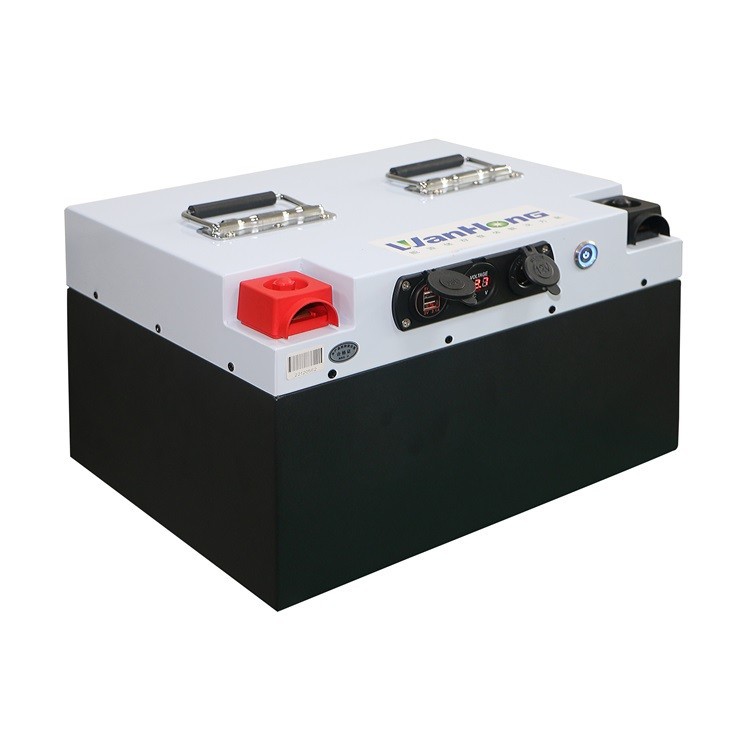
Solar Power
Another alternative is to use solar panels to recharge the battery while using the microwave. Solar power is a clean and renewable energy source that can help offset the power consumption of the microwave. However, the solar panel system needs to be properly sized to meet the power requirements of the microwave and the battery charging needs.
When It Might Be Possible
In some cases, it might be possible to use a 12V RV battery to power a microwave for short periods. If you have a small, low - power microwave (e.g., a 300 - watt microwave), the current draw will be much lower. Using the formula I = P / V, a 300 - watt microwave would require a current of I = 300W / 12V = 25 amps. This is a more manageable current draw for a 12V RV battery.
Also, if you have a large battery bank and a high - quality inverter, and you only use the microwave occasionally for a short time, it may be feasible. But you need to be careful not to over - discharge the battery, as this can cause permanent damage.
Conclusion
In conclusion, while it is technically possible to use a 12V RV battery to power a microwave, it is not without challenges. The high current draw, inverter requirements, and limited battery capacity make it a difficult task. However, with careful planning, the use of alternative solutions such as larger battery banks, 24V systems, or solar power, it can be made more practical.
If you're considering powering a microwave in your RV and need advice on the best battery solution, feel free to reach out to us. We have a wide range of 12V RV Battery options and can help you find the right one for your needs. Whether you're a weekend camper or a full - time RV traveler, we're here to assist you in making the most of your RV power system. Contact us to start a conversation about your power requirements and explore the best battery solutions for your RV.
References
- "Electrical Engineering Fundamentals" by John Bird
- RV Electrical Systems Manuals from various manufacturers