

As a supplier of 12V Lifepo4 marine batteries, I often get asked about how the charging efficiency of our 12V Lifepo4 marine batteries compares to other types. In this blog post, I'll delve into the technical aspects of charging efficiency, compare 12V Lifepo4 marine batteries with other common battery types used in marine applications, and explain why our 12V Lifepo4 marine batteries stand out.
Understanding Charging Efficiency
Charging efficiency is a critical metric when it comes to batteries. It refers to the ratio of the energy stored in the battery during charging to the energy supplied to the battery from the charger. A higher charging efficiency means less energy is wasted as heat during the charging process, which is not only more energy - efficient but also helps to prolong the battery's lifespan.
12V Lifepo4 Marine Batteries
Let's start by looking at 12V Lifepo4 marine batteries. Lithium iron phosphate (Lifepo4) batteries have several characteristics that contribute to their high charging efficiency. Firstly, Lifepo4 batteries have a flat charge curve. This means that throughout most of the charging process, the battery can accept a relatively high charge current without overheating or causing excessive stress on the battery cells.
Our 12V Lifepo4 Marine Battery can typically achieve a charging efficiency of up to 95 - 98%. This high efficiency is due to the low internal resistance of Lifepo4 cells. With low internal resistance, less energy is dissipated as heat during charging, allowing more of the input energy to be stored in the battery.
Another advantage of 12V Lifepo4 marine batteries is their ability to charge at a faster rate. They can accept a high charge current, which means they can be fully charged in a shorter time compared to many other battery types. This is especially beneficial for marine applications where time is often limited, and quick charging can get the vessel back on the water faster.
Comparison with Lead - Acid Batteries
Lead - acid batteries are one of the most common types of batteries used in marine applications. There are two main types: flooded lead - acid (FLA) and sealed lead - acid (SLA), which includes absorbed glass mat (AGM) and gel batteries.
Lead - acid batteries generally have a lower charging efficiency compared to 12V Lifepo4 marine batteries. The charging efficiency of lead - acid batteries typically ranges from 70 - 85%. This lower efficiency is mainly due to their higher internal resistance. As the battery charges, a significant amount of energy is lost as heat, which not only reduces the overall efficiency but also can cause damage to the battery over time.
Lead - acid batteries also have a more complex charging process. They require a multi - stage charging algorithm to prevent overcharging and sulfation. Overcharging can lead to water loss in FLA batteries and reduce the battery's capacity and lifespan. In contrast, 12V Lifepo4 marine batteries are more forgiving in terms of charging and are less prone to overcharging damage.
Comparison with Nickel - Based Batteries
Nickel - based batteries, such as nickel - cadmium (NiCd) and nickel - metal hydride (NiMH) batteries, are less commonly used in marine applications but are still worth comparing.
NiCd batteries have a charging efficiency of around 70 - 80%. They suffer from the "memory effect," which means that if they are not fully discharged before recharging, their capacity can gradually decrease over time. This requires careful management of the charging and discharging cycles.
NiMH batteries have a slightly higher charging efficiency, usually around 80 - 90%. However, they are more sensitive to high temperatures during charging and discharging, which can reduce their efficiency and lifespan. In marine environments, where temperatures can vary widely, this can be a significant drawback.
Compared to both NiCd and NiMH batteries, 12V Lifepo4 marine batteries offer higher charging efficiency, better temperature tolerance, and longer cycle life.
Impact on Marine Applications
The high charging efficiency of 12V Lifepo4 marine batteries has several positive impacts on marine applications. Firstly, it reduces the energy consumption of the charging system. This means that less fuel is needed to power the generator or less power is drawn from the shore power supply during charging.
Secondly, the fast charging capability allows for more flexibility in the vessel's operation. Whether it's a short stop at a marina or a quick recharge between fishing trips, the ability to charge the battery quickly can save time and increase the overall usability of the vessel.

Finally, the longer lifespan of 12V Lifepo4 marine batteries due to their high - efficiency charging reduces the need for frequent battery replacements. This not only saves money in the long run but also reduces the environmental impact associated with battery disposal.
Other Voltage Options
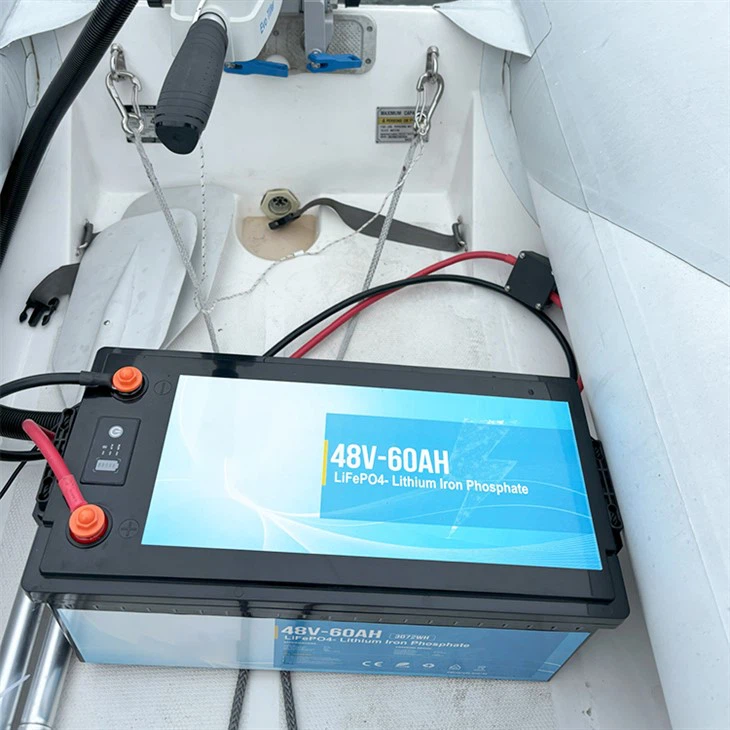
In addition to our 12V Lifepo4 marine batteries, we also offer 24V Lifepo4 Marine Battery and 48V Lifepo4 Marine Battery options. These higher - voltage batteries have similar high - charging efficiency characteristics as the 12V version. The choice between different voltage options depends on the specific power requirements of the marine equipment on board. Higher - voltage batteries can be more suitable for larger vessels with high - power electrical systems.
Conclusion
In conclusion, 12V Lifepo4 marine batteries offer superior charging efficiency compared to other common battery types used in marine applications. Their high efficiency, fast charging capability, and long lifespan make them an excellent choice for marine enthusiasts and professionals alike.
If you are in the market for a reliable and efficient marine battery, I encourage you to consider our 12V Lifepo4 marine batteries. Whether you have a small fishing boat or a large yacht, our batteries can provide the power and performance you need. We are always ready to discuss your specific requirements and help you find the best battery solution for your vessel. Reach out to us to start a conversation about your battery needs and explore how our products can enhance your marine experience.
References
- Linden, D., & Reddy, T. B. (2002). Handbook of Batteries. McGraw - Hill.
- Dunn, B., Kamath, H., & Tarascon, J. M. (2011). Electrical energy storage for the grid: a battery of choices. Science, 334(6058), 928 - 935.
- Rand, D. A. J., Moseley, P. T., Garche, J., & Parker, C. (2004). Valve - Regulated Lead - Acid Batteries. Elsevier.