

In household solar systems, energy storage batteries paired with inverters are essential for converting stored DC power into usable AC power for appliances. Inverters come in two main types: high frequency (HF) and low frequency (LF, often referred to as "power frequency" or "industrial frequency"). Each type has unique characteristics that impact performance, compatibility, and suitability for specific applications. This article explores the differences between HF and LF inverters, their advantages, and how to select the right one for your energy storage system, drawing on technical insights and user experiences to guide homeowners in making informed choices.
Differences Between High and Low Frequency Inverters
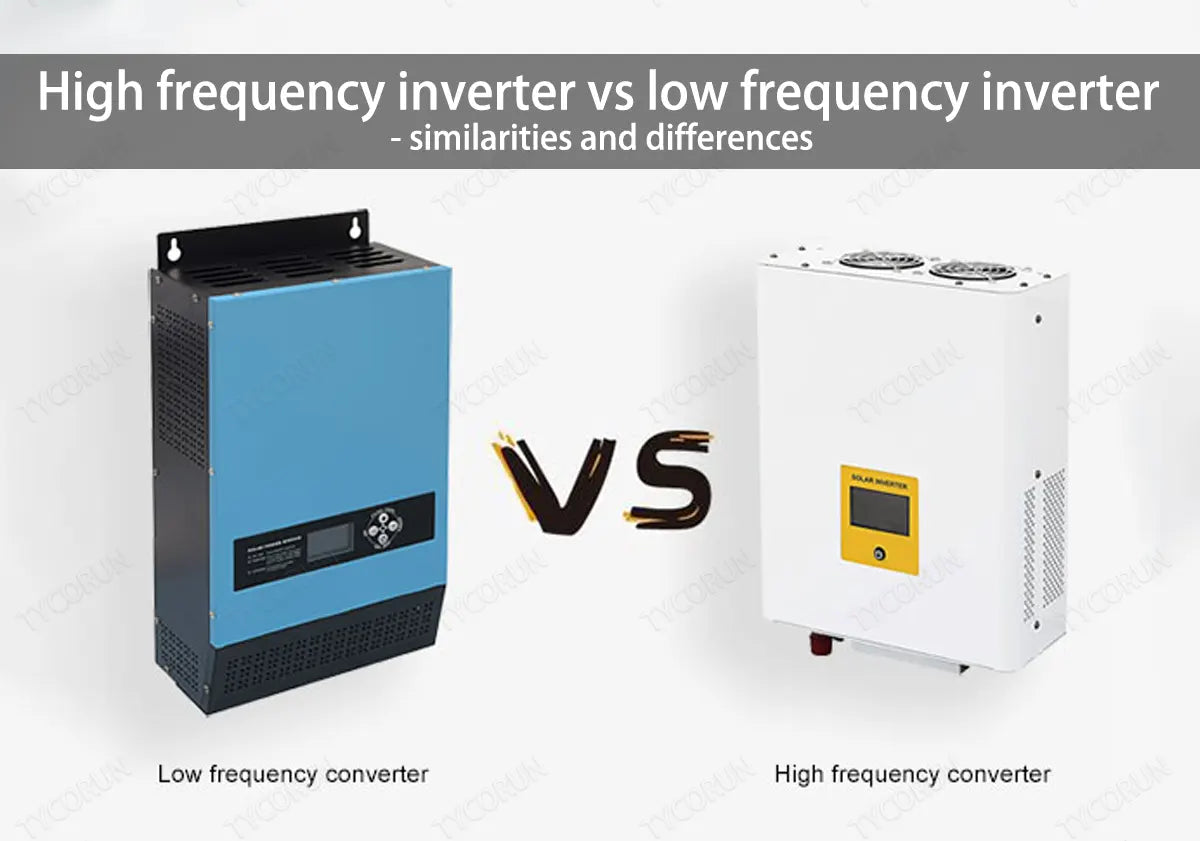
1.High Frequency Inverters
HF inverters operate at switching frequencies of 20–100kHz, using smaller, lighter components like MOSFETs or IGBTs and high-frequency transformers. They convert low-voltage DC (e.g., from a 48V battery) into high-frequency AC, boost it via a compact transformer, rectify it to high-voltage DC, and then invert it to 220V/50Hz AC for household use. This multi-step process results in a lightweight, efficient design.
2.Low Frequency Inverters
LF inverters operate at 50–60Hz, matching the grid's frequency, and use large, heavy transformers to convert DC to AC directly. They typically employ thyristor (SCR) rectifiers and robust transformers, which boost low-voltage AC to 220V/50Hz AC. The simpler design relies on traditional analog circuits, prioritizing durability over compactness.
Key Technical Differences
- Switching Frequency: HF inverters use high-speed switching (kHz range), while LF inverters operate at grid frequency (50/60Hz).
- Components: HF inverters rely on electronic switches and small transformers; LF inverters use heavy iron-core transformers and simpler circuits.
- Size and Weight: HF inverters are compact (e.g., 10–20kg for a 5kW unit), while LF inverters are heavier (30–50kg for similar power) due to large transformers.
- Efficiency: HF inverters achieve 90–95% efficiency, especially at light loads, while LF inverters range from 80–90% due to transformer losses.
Advantages of Each Inverter Type
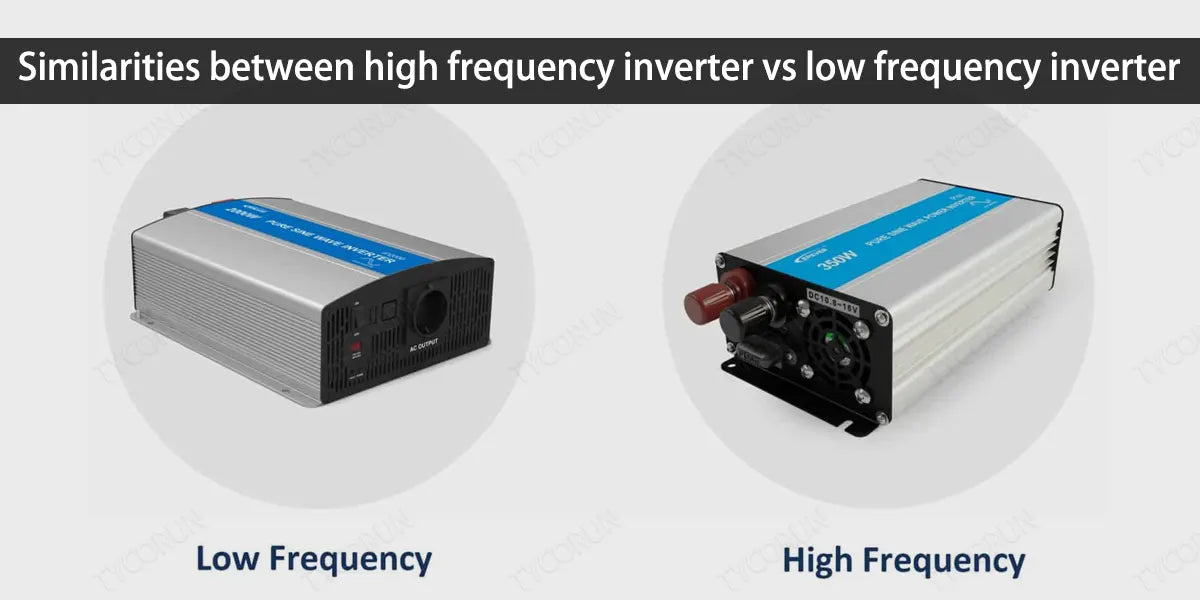
1.High Frequency Inverters
- Compact and Lightweight: Their smaller transformers make HF inverters ideal for space-constrained homes, RVs, or portable setups. A 5kW HF inverter may weigh just 15kg, compared to 40kg for an LF model.
- Higher Efficiency: HF inverters minimize energy loss, especially at low-to-medium loads, saving battery capacity. A 2024 study noted 2–5% better efficiency than LF inverters in typical home use.
- Lower Cost: Using fewer raw materials (e.g., less copper), HF inverters are 10–20% cheaper, with a 5kW unit costing $800–$1,200 vs. $1,000–$1,500 for LF.
- Quiet Operation: Without large transformers, HF inverters produce minimal noise, suitable for residential settings.
- Fast Response: High switching speeds enable quick adjustments to load changes, ideal for sensitive electronics like laptops or TVs.
A homeowner in the UAE shared, "Our 5kW HF inverter fits perfectly in our small utility room and powers our lights and appliances efficiently."
2.Low Frequency Inverters
- High Surge Capacity: LF inverters handle power spikes up to 300% of their rated capacity for several seconds, compared to 200% for HF inverters for a fraction of a second. This makes them ideal for heavy appliances like air conditioners or water pumps.
- Reliability: Robust transformers and simpler circuits make LF inverters more durable, especially in harsh conditions like Iraq's heat or voltage fluctuations. They have a lower failure rate (5% vs. 10% for HF over five years).
- Better for Inductive Loads: LF inverters excel with motors, compressors, or tools requiring high startup currents, reducing wear on appliances.
- Input Voltage Tolerance: LF inverters handle wider battery voltage fluctuations, critical for systems with varying solar input or aging batteries.
- Cleaner Output: LF inverters produce purer sine waves with lower harmonic distortion, benefiting sensitive equipment like medical devices.
A small business owner in South Africa said, "Our LF inverter runs our workshop's heavy tools without a hitch, even during power surges."
Disadvantages to Consider
HF Inverters: Struggle with high inductive loads (e.g., large motors), have weaker overload capacity, and may overheat under sustained heavy loads. Their complex electronics increase repair costs if damaged.
LF Inverters: Bulky and heavy, requiring more installation space and effort. Lower efficiency leads to higher energy loss, and their higher cost may deter budget-conscious buyers. They also produce a noticeable hum under load.
Battery Compatibility and Selection Tips
When pairing inverters with energy storage batteries, such as a 15kWh LiFePO4 battery, compatibility and system requirements are critical:
1. Battery Voltage
- HF Inverters: Typically support 12V, 24V, or 48V systems. For a 15kWh battery (often 51.2V nominal), ensure the inverter's input range includes 48–60V. Most modern HF inverters, like those from Deye, are compatible with 48V LiFePO4 batteries.
- LF Inverters: Also support 12V, 24V, or 48V, but their robust design tolerates wider voltage fluctuations (e.g., 40–60V for a 48V system), making them suitable for older or less stable batteries.
2. Battery Chemistry
- LiFePO4: Both inverter types work well with LiFePO4 batteries due to their stable voltage and high cycle life. Ensure the inverter's Battery Management System (BMS) communication protocol (e.g., CAN or RS485) matches the battery's, such as those from Pylontech or BYD.
- Lead-Acid: LF inverters are preferred for lead-acid batteries, which have lower DoD (50%) and more voltage variation, as LF inverters handle these fluctuations better. HF inverters may require precise voltage regulation, limiting lead-acid compatibility.
3. Load Requirements
- Light Loads (e.g., lights, TVs, laptops): Choose HF inverters for efficiency and compactness. A 3–5kW HF inverter paired with a 15kWh battery suits a 10–15kWh/day household.
- Heavy Loads (e.g., AC units, pumps): Opt for LF inverters for their surge capacity. A 5kW LF inverter ensures reliable operation of high-startup appliances, even in a 20kWh/day home.
4. System Scale and Budget
- Small Systems: HF inverters are cost-effective for smaller setups (e.g., 5–10kWh batteries) with moderate loads.
- Large or Industrial Systems: LF inverters are better for larger systems (e.g., 15kWh+ batteries) with heavy or continuous loads, offering long-term reliability.
5. Environmental Conditions
- Hot Climates: LF inverters are more resilient to high temperatures (up to 50°C), while HF inverters may derate above 40°C. Ensure proper ventilation for both.
- Dust or Humidity: Choose IP65-rated inverters for dusty regions like Iraq to protect against environmental damage.
A user in Texas noted, "Our 15kWh LiFePO4 battery works flawlessly with a 5kW LF inverter, powering our AC and fridge during outages."
Technical Comparison
| Feature | High Frequency Inverter | Low Frequency Inverter |
|---|---|---|
| Efficiency | 90–95% | 80–90% |
| Surge Capacity | 200% for <1s | 300% for several seconds |
| Weight (5kW) | 10–20kg | 30–50kg |
| Cost (5kW) | $800–$1,200 | $1,000–$1,500 |
| Best for | Light loads, small spaces | Heavy loads, harsh conditions |
| Battery Compatibility | LiFePO4, precise voltage | LiFePO4, lead-acid, wider range |
Why This Choice Matters
Selecting the right inverter for your energy storage battery impacts:
- Performance: HF inverters save energy for light loads, while LF inverters excel with heavy appliances.
- Reliability: LF inverters offer durability in challenging environments, while HF inverters suit stable conditions.
- Cost-Effectiveness: HF inverters lower upfront costs, but LF inverters reduce long-term maintenance for heavy use.
- Compatibility: Proper inverter-battery pairing ensures optimal charging and discharging, extending system life.
A 2024 industry survey found that 65% of off-grid homeowners preferred LF inverters for their surge capacity, while 70% of urban users chose HF inverters for efficiency and size.
Conclusion
High and low frequency inverters each serve distinct roles in household energy storage systems. HF inverters offer efficiency, compactness, and affordability for light loads, while LF inverters provide reliability and surge capacity for heavy appliances. When pairing with energy storage batteries, consider your load profile, battery type, and environmental conditions to ensure compatibility and performance. By evaluating these factors, you can build a solar system that meets your energy needs effectively.
For reliable energy solutions, WHET Energy's energy storage batteries, including our 15kWh solar battery, integrate seamlessly with both HF and LF inverters. Visit our website to explore our offerings.