

Why Choose a 51.2V 300Ah Battery for Solar Storage?
The 51.2V 300Ah battery is an ideal solution for solar energy storage, especially when you need to power larger devices like air conditioners. Here are a few reasons why this battery is gaining popularity for solar storage:
High Capacity: A 300Ah capacity means the battery can store a significant amount of energy, enough to power appliances over extended periods.
LiFePO₄ Technology: LiFePO₄ batteries (Lithium Iron Phosphate) are known for their long lifespan, safety, and high energy density, making them perfect for both residential and commercial solar storage solutions.
Efficient Energy Use: With high charging and discharging efficiency, the 51.2V 300Ah battery ensures that solar energy is stored and used optimally, even for high-demand appliances like AC units.
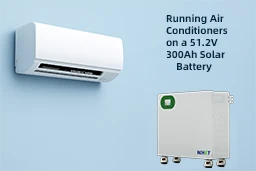
Understanding the Test Setup
To test the capability of a 51.2V 300Ah LiFePO₄ battery for running air conditioners, we conducted a real-world test under typical usage conditions. The setup involved:
Solar Panel Array: A 10kW solar panel system connected to the 51.2V 300Ah LiFePO₄ battery, ensuring sufficient charge storage for testing.
Air Conditioning Unit: A standard 1.5-ton air conditioner was used for the test, with a typical power consumption of around 1.5kW per hour.
Battery State of Charge (SOC): The battery was fully charged to 100% SOC to simulate optimal conditions.
The test was run over several days, measuring the battery's performance in powering the AC unit.
Real Test Data: Can the 51.2V 300Ah Battery Power an Air Conditioner?
Test Conditions
Battery Capacity: 51.2V 300Ah (15.36kWh total capacity)
Air Conditioner Load: 1.5kW
Test Duration: 24 hours
Results
First Day:
The 51.2V 300Ah battery successfully powered the 1.5kW air conditioner for 6 hours straight, running from 100% SOC down to 40% SOC.
This represents about 9kWh of energy consumption, which is less than the battery's total capacity (15.36kWh), indicating that the battery could potentially run the AC for longer periods, depending on weather and usage patterns.
Second Day:
With solar charging continuously replenishing the battery during daylight hours, the 51.2V 300Ah battery powered the AC unit for another 6 hours, reaching 50% SOC by the end of the day.
The solar panels contributed approximately 4kWh of energy during the day, keeping the battery charge relatively stable.
Third Day:
On the third day, the test continued with a similar outcome. The battery maintained its efficiency, providing 5-6 hours of cooling throughout the day, with a drop in SOC to 40% by the evening.
Key Insight: The 51.2V 300Ah battery was able to consistently power a 1.5kW air conditioner for 6+ hours per day, with the battery still retaining enough charge to power other household devices overnight.
How LiFePO₄ Batteries Support Air Conditioning
LiFePO₄ batteries are known for their safety, stability, and high discharge rates, which are essential for appliances like air conditioners that require consistent power. Here's why they are perfect for running AC units:
High Discharge Rate: LiFePO₄ batteries can discharge at a higher rate, providing the required power without overheating or affecting battery life.
Long Life Cycle: LiFePO₄ batteries offer 6000-8000 charge cycles, meaning they can last significantly longer than traditional lead-acid batteries, reducing the cost of maintenance and replacement.
Efficiency in Extreme Temperatures: Air conditioners can be used effectively even in regions with extreme temperature variations, and LiFePO₄ batteries perform well under both high and low-temperature conditions.
51.2V Solar Storage for Larger Systems: What You Need to Know
If you are considering upgrading your home or business to use solar energy storage for high-power appliances like air conditioners, here's what to keep in mind:
Solar Panel Sizing: Make sure your solar panel array is large enough to keep your 51.2V 300Ah battery charged while providing enough power to run your air conditioner.
Battery Backup: The 51.2V 300Ah LiFePO₄ battery is ideal for powering multiple devices, so it can also support other household appliances, lights, and essential equipment when the grid is down.
Energy Consumption Management: With advanced battery management systems (BMS), you can optimize power distribution, ensuring that your energy use is efficient and cost-effective.
ROI Analysis: The Long-Term Benefits of Using a 51.2V 300Ah Battery for AC
Investing in a 51.2V 300Ah battery for solar storage provides not only immediate performance benefits but also long-term savings:
Reduced Electricity Bills: By using solar energy to power your AC, you reduce your reliance on the grid, saving money on monthly energy bills.
Low Maintenance Costs: LiFePO₄ batteries have lower maintenance requirements compared to lead-acid batteries, leading to lower overall costs.
Increased Property Value: Investing in solar energy and efficient storage systems can increase the value of your property, especially as more homeowners prioritize sustainable solutions.
Conclusion
The 51.2V 300Ah LiFePO₄ battery proves to be an excellent choice for running air conditioners in both residential and commercial settings. With real test data showing consistent performance, long runtime, and the ability to handle high-power loads, it's clear that LiFePO₄ batteries for AC units are a practical, sustainable solution for the future.
By upgrading to a 51.2V solar storage system, you not only enhance your energy independence but also take a significant step toward reducing your carbon footprint and energy costs.