

As a leading supplier of 80V forklift batteries, I often receive inquiries from customers about using an 80V forklift battery with a regenerative braking system. This topic is not only relevant to the efficiency and performance of forklifts but also has implications for cost - savings and environmental sustainability. In this blog, I will delve into the technical aspects, benefits, and considerations of using an 80V forklift battery in conjunction with a regenerative braking system.
Understanding the Basics of Regenerative Braking Systems
Regenerative braking systems are designed to convert the kinetic energy of a moving forklift into electrical energy during the braking process. When a forklift decelerates, instead of dissipating the energy as heat through traditional friction brakes, the regenerative braking system captures this energy and stores it back in the battery. This process not only reduces wear and tear on the braking components but also extends the battery's runtime.
The working principle of a regenerative braking system is based on the laws of electromagnetism. When the forklift's motor operates in reverse mode during braking, it acts as a generator. The rotation of the motor's armature in the magnetic field induces an electric current, which is then fed back into the battery. This energy - recovery mechanism is particularly useful in applications where frequent stops and starts are required, such as in warehouses and distribution centers.
Compatibility of 80V Forklift Batteries with Regenerative Braking Systems
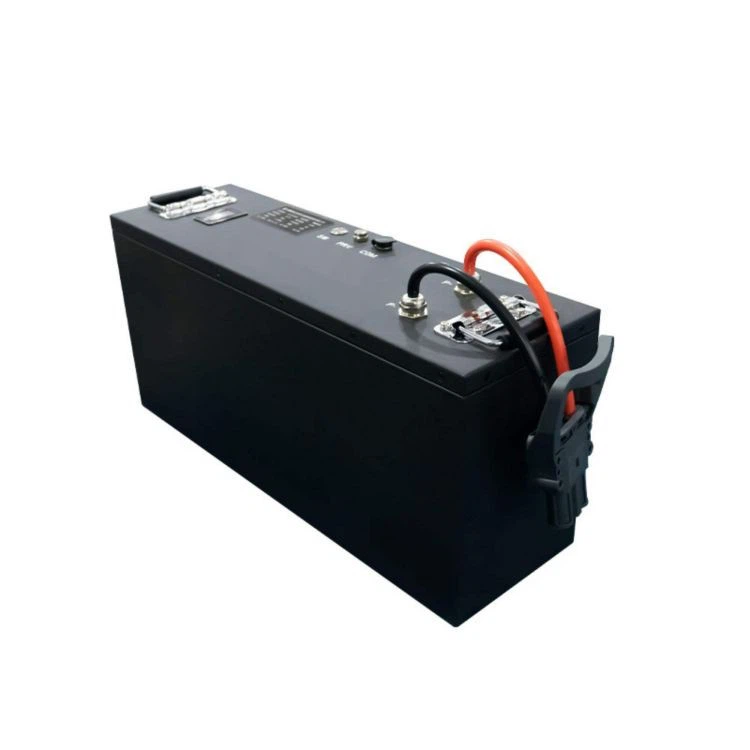
One of the primary concerns when considering using an 80V forklift battery with a regenerative braking system is compatibility. The voltage of the battery must match the requirements of the forklift's electrical system and the regenerative braking system. An 80V battery is suitable for forklifts that are designed to operate at this voltage level. Most modern forklifts with regenerative braking systems are engineered to work with specific voltage ranges, and 80V is a common choice for medium - to large - sized forklifts.
In addition to voltage compatibility, the battery's capacity and charge acceptance rate are also crucial factors. The regenerative braking system generates electrical energy at a certain rate, and the battery must be able to accept this energy efficiently. A high - quality 80V forklift battery with a high charge acceptance rate can effectively store the energy recovered during braking, maximizing the benefits of the regenerative braking system.
Benefits of Using an 80V Forklift Battery with a Regenerative Braking System
Extended Battery Life
The regenerative braking system helps to reduce the overall energy consumption of the forklift. By recovering and reusing the kinetic energy, the battery does not need to provide as much power during the operation. This reduces the depth of discharge of the battery, which is a key factor in determining the battery's lifespan. A battery that is not deeply discharged on a regular basis will last longer, saving the user money on battery replacements.

Cost Savings
In addition to extending the battery life, the regenerative braking system can also lead to significant cost savings in terms of energy consumption. Since the forklift can reuse the energy generated during braking, it requires less electricity from the grid to operate. This can result in lower electricity bills, especially for businesses that operate a large fleet of forklifts.
Environmental Sustainability
Using an 80V forklift battery with a regenerative braking system is also beneficial for the environment. By reducing the energy consumption and the need for new battery replacements, it helps to decrease the carbon footprint associated with forklift operations. This is in line with the growing trend towards sustainable business practices.
Considerations When Using an 80V Forklift Battery with a Regenerative Braking System
Initial Investment
One of the main considerations is the initial investment required for both the 80V forklift battery and the regenerative braking system. The cost of a high - quality 80V battery and the installation of a regenerative braking system can be relatively high. However, it is important to consider the long - term savings in energy costs and battery replacement costs when evaluating the investment.
Maintenance and Monitoring
Proper maintenance and monitoring are essential when using an 80V forklift battery with a regenerative braking system. The battery needs to be regularly inspected for signs of wear and tear, and the regenerative braking system should be checked to ensure that it is functioning properly. This may require additional training for the forklift operators and maintenance staff.
Compatibility with Existing Equipment
If you are considering retrofitting an existing forklift with an 80V battery and a regenerative braking system, it is important to ensure that the new components are compatible with the existing equipment. This may involve modifications to the forklift's electrical system and control unit.
Other Forklift Battery Options
While 80V forklift batteries are suitable for many applications, there are also other voltage options available. For smaller forklifts or applications with lower power requirements, 24V Forklift Battery, 36V Forklift Battery, and 48V Forklift Battery may be more appropriate. These batteries are also compatible with regenerative braking systems and can provide similar benefits in terms of energy efficiency and cost savings.
Conclusion
In conclusion, using an 80V forklift battery with a regenerative braking system is a viable and beneficial option for many forklift applications. It offers extended battery life, cost savings, and environmental sustainability. However, it is important to consider the initial investment, maintenance requirements, and compatibility with existing equipment. If you are interested in learning more about our 80V forklift batteries or have any questions about using them with a regenerative braking system, please feel free to contact us for a detailed discussion and procurement negotiation.
References
- Manufacturer's specifications for 80V forklift batteries
- Technical literature on regenerative braking systems for forklifts
- Industry reports on energy efficiency in forklift operations