

The electrical conductivity of electrodes in an 80V forklift battery is a crucial factor that significantly impacts the battery's performance, efficiency, and overall lifespan. As a leading supplier of 80V Forklift Battery, I have witnessed firsthand the importance of understanding this aspect for both manufacturers and end - users.
Understanding Electrical Conductivity
Electrical conductivity is a measure of a material's ability to conduct an electric current. In the context of forklift batteries, the electrodes are the key components responsible for facilitating the flow of electrical charge. The higher the conductivity of the electrodes, the more efficiently the battery can transfer energy, which in turn enhances the forklift's operational capabilities.
The electrodes in an 80V forklift battery are typically made of materials such as lead - acid, lithium - ion, or nickel - metal hydride. Each material has its own unique electrical conductivity properties.
Lead - Acid Electrodes
Lead - acid batteries are the most common type used in forklifts. The electrodes in these batteries are usually made of lead and lead dioxide. Lead has a relatively low electrical conductivity compared to some other metals, but it is widely used due to its low cost, high availability, and well - understood chemistry.
The conductivity of lead - acid electrodes can be affected by several factors. One of the main factors is the state of charge of the battery. As the battery discharges, the lead sulfate forms on the electrodes, which can reduce the conductivity. Over time, the accumulation of lead sulfate can lead to a phenomenon known as sulfation, which further degrades the battery's performance.
Another factor is the temperature. Lead - acid batteries perform best within a certain temperature range. At low temperatures, the conductivity of the electrodes decreases, which can result in a reduction in the battery's capacity and power output. Conversely, high temperatures can accelerate the chemical reactions within the battery, leading to increased self - discharge and potential damage to the electrodes.
Lithium - Ion Electrodes
Lithium - ion batteries are becoming increasingly popular in forklift applications due to their high energy density, long lifespan, and fast charging capabilities. The electrodes in lithium - ion batteries are typically made of lithium - based compounds, such as lithium cobalt oxide, lithium manganese oxide, or lithium iron phosphate.
Lithium - ion electrodes generally have higher electrical conductivity compared to lead - acid electrodes. This is because lithium ions are highly mobile within the electrolyte, allowing for a more efficient flow of charge. Additionally, lithium - ion batteries are less affected by temperature variations compared to lead - acid batteries, which makes them more suitable for a wider range of operating conditions.
However, the conductivity of lithium - ion electrodes can also be influenced by factors such as the quality of the materials, the manufacturing process, and the state of charge. For example, if the lithium - ion battery is over - charged or over - discharged, it can lead to the formation of dendrites on the electrodes, which can reduce the conductivity and potentially cause short - circuits.
Nickel - Metal Hydride Electrodes
Nickel - metal hydride (NiMH) batteries are another option for forklift applications. The electrodes in NiMH batteries are made of nickel hydroxide and a hydrogen - absorbing alloy. NiMH batteries offer a good balance between energy density, cost, and environmental friendliness.
The electrical conductivity of NiMH electrodes is intermediate between lead - acid and lithium - ion electrodes. The conductivity is mainly determined by the properties of the hydrogen - absorbing alloy, which can vary depending on the composition and structure of the alloy. Similar to other battery types, the conductivity of NiMH electrodes can be affected by factors such as temperature, state of charge, and the presence of impurities.
Measuring Electrical Conductivity
There are several methods for measuring the electrical conductivity of electrodes in an 80V forklift battery. One common method is the four - point probe technique. This method involves applying a known current through two outer probes and measuring the voltage drop across two inner probes. The conductivity can then be calculated using Ohm's law.
Another method is the impedance spectroscopy technique. This technique involves applying a small alternating current to the battery and measuring the impedance as a function of frequency. The impedance data can provide information about the electrical properties of the electrodes, including the conductivity.
Importance of Electrical Conductivity in Forklift Batteries
The electrical conductivity of the electrodes in an 80V forklift battery has a direct impact on the battery's performance and efficiency. A high - conductivity electrode allows for a more efficient transfer of energy, which means that the forklift can operate for longer periods of time on a single charge. This is particularly important in industrial applications where forklifts are used for long shifts.
In addition, high - conductivity electrodes can also reduce the internal resistance of the battery. A lower internal resistance means that less energy is wasted as heat during the charging and discharging process. This not only improves the battery's efficiency but also extends its lifespan.

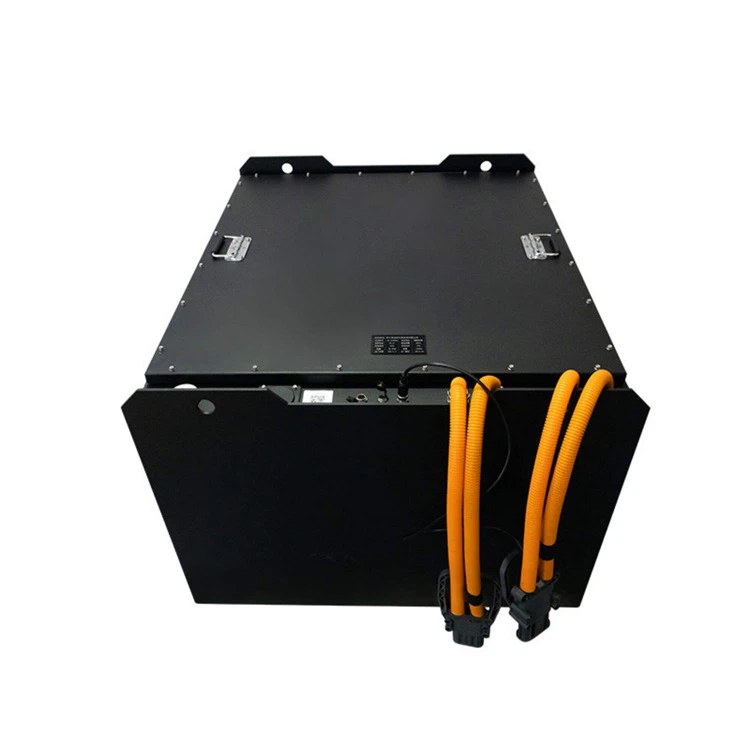
Comparing with Other Voltage Forklift Batteries
When comparing the electrical conductivity of electrodes in an 80V forklift battery with other voltage forklift batteries, such as 48V Forklift Battery and 24V Forklift Battery, the basic principles remain the same. However, the higher voltage in an 80V battery may require electrodes with higher conductivity to handle the increased current flow.
In general, the electrical conductivity requirements for an 80V forklift battery are more stringent compared to lower - voltage batteries. This is because the higher voltage means that there is a greater potential for power loss due to resistance in the electrodes. Therefore, manufacturers of 80V forklift batteries need to pay special attention to the selection of electrode materials and the design of the battery to ensure optimal conductivity.
Conclusion
The electrical conductivity of the electrodes in an 80V forklift battery is a critical aspect that affects the battery's performance, efficiency, and lifespan. Whether using lead - acid, lithium - ion, or nickel - metal hydride electrodes, understanding the factors that influence conductivity and how to measure it is essential for both battery manufacturers and end - users.
As a supplier of 80V forklift batteries, we are committed to providing high - quality batteries with optimal electrode conductivity. If you are in the market for an 80V forklift battery or have any questions about battery performance and conductivity, we encourage you to contact us for a detailed discussion. Our team of experts is ready to assist you in finding the best solution for your specific needs.
References
- Linden, D., & Reddy, T. B. (Eds.). (2002). Handbook of batteries. McGraw - Hill.
- Tarascon, J. M., & Armand, M. (2001). Issues and challenges facing rechargeable lithium batteries. Nature, 414(6861), 359 - 367.
- Burke, A. F. (2007). Batteries and ultracapacitors for electric, hybrid, and fuel cell vehicles. Proceedings of the IEEE, 95(4), 805 - 824.