

As a supplier of 48V Lifepo4 marine batteries, one of the most frequently asked questions I encounter is about the maximum continuous current output of these batteries. Understanding this parameter is crucial for anyone looking to use these batteries in marine applications, as it directly impacts the performance and safety of the electrical systems on board.
Basics of 48V Lifepo4 Marine Batteries
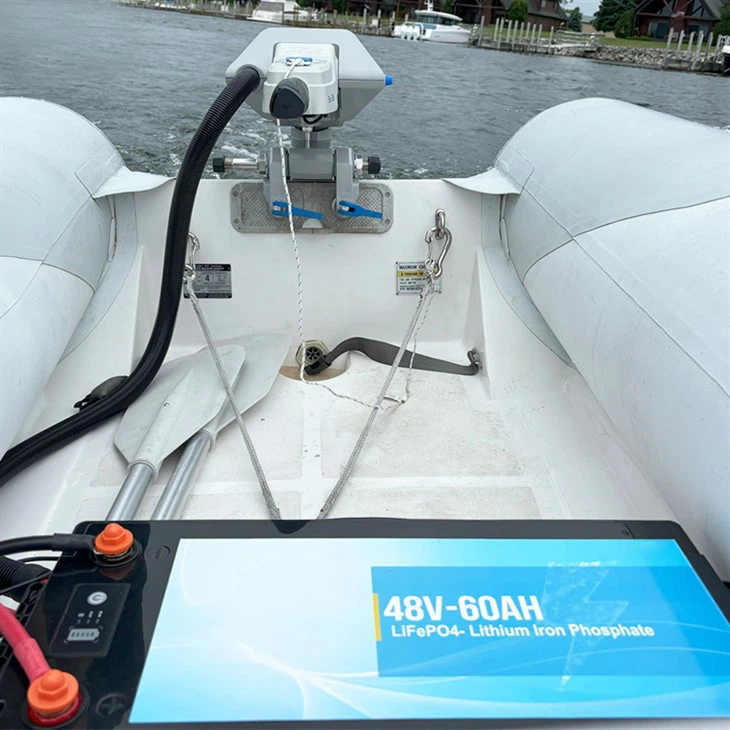
Lithium iron phosphate (Lifepo4) batteries have gained significant popularity in the marine industry due to their numerous advantages over traditional lead - acid batteries. They offer higher energy density, longer cycle life, faster charging, and better performance in a wide range of temperatures. The 48V Lifepo4 marine batteries are specifically designed to meet the demanding power requirements of modern marine vessels, powering everything from navigation equipment to high - power appliances.
A 48V Lifepo4 marine battery is essentially a collection of individual Lifepo4 cells connected in series and sometimes in parallel to achieve the desired voltage and capacity. The maximum continuous current output of these batteries is determined by several factors, including the internal resistance of the cells, the battery management system (BMS), and the overall design of the battery pack.
Factors Affecting Maximum Continuous Current Output
Internal Resistance of Cells
The internal resistance of Lifepo4 cells plays a vital role in determining the maximum continuous current output. When current flows through a battery, a certain amount of power is dissipated as heat due to the internal resistance. The formula for power dissipation is (P = I^{2}R), where (P) is the power dissipated, (I) is the current, and (R) is the internal resistance.
If the current is too high, excessive heat will be generated, which can damage the cells and reduce the battery's lifespan. High - quality Lifepo4 cells typically have lower internal resistance, allowing them to handle higher continuous currents without overheating. As a supplier, we carefully select cells with low internal resistance to ensure our 48V Lifepo4 marine batteries can deliver high - current outputs safely.
Battery Management System (BMS)
The BMS is an essential component of a 48V Lifepo4 marine battery. It monitors and controls the charging and discharging processes, ensuring the safety and longevity of the battery. One of the key functions of the BMS is to limit the maximum continuous current output.
The BMS is designed to protect the battery from over - current, over - voltage, and under - voltage conditions. It uses sensors to measure the current, voltage, and temperature of the battery and will automatically cut off the power if any of these parameters exceed the safe limits. The maximum continuous current rating set by the BMS is based on the capabilities of the cells and the overall design of the battery pack.
Battery Design
The way the battery is designed also affects its maximum continuous current output. For example, the number of cells connected in parallel can increase the battery's capacity and its ability to handle higher currents. When cells are connected in parallel, the total internal resistance decreases, allowing more current to flow without excessive power dissipation.
In addition, the quality of the electrical connections within the battery pack is crucial. Poor connections can increase the resistance and lead to overheating, which can limit the maximum continuous current output. At our company, we use high - quality materials and advanced manufacturing techniques to ensure reliable electrical connections in our 48V Lifepo4 marine batteries.
Typical Maximum Continuous Current Output Values
The maximum continuous current output of a 48V Lifepo4 marine battery can vary widely depending on the specific model and design. Generally, for smaller capacity batteries, the maximum continuous current output might be in the range of 20 - 50 amps. These batteries are suitable for powering small - scale marine equipment such as navigation lights and fish finders.
For larger capacity batteries, which are often used to power high - power appliances like air conditioners and electric propulsion systems, the maximum continuous current output can be as high as 100 - 300 amps or even more. However, it's important to note that these values are approximate and can be affected by factors such as temperature and the state of charge of the battery.
Importance of Knowing the Maximum Continuous Current Output
Knowing the maximum continuous current output of a 48V Lifepo4 marine battery is essential for proper system design and operation. If the electrical load on the battery exceeds its maximum continuous current rating, it can lead to overheating, reduced battery life, and even safety hazards.
For example, when designing a marine electrical system, it's important to calculate the total current draw of all the connected devices and ensure that the battery can handle this load continuously. If the load is too high, the battery may not be able to supply the required power, and the BMS may cut off the power to protect the battery.
Comparison with Other Voltage Marine Batteries
In addition to 48V Lifepo4 marine batteries, we also offer 12V Lifepo4 Marine Battery and 24V Lifepo4 Marine Battery. The maximum continuous current output of these batteries also depends on the same factors as the 48V batteries.
However, due to the lower voltage, 12V and 24V batteries generally need to supply higher currents to deliver the same amount of power as a 48V battery. For example, to power a 1000 - watt device, a 12V battery would need to supply approximately 83.3 amps ((I=\frac{P}{V}=\frac{1000}{12})), while a 48V battery would only need to supply about 20.8 amps ((I = \frac{1000}{48})). This means that for high - power applications, 48V Lifepo4 marine batteries are often a more practical choice as they can handle the same power requirements with lower currents.
Determining the Right Battery for Your Needs
When choosing a 48V Lifepo4 marine battery, it's important to consider your specific power requirements and the maximum continuous current output. First, make a list of all the electrical devices you plan to connect to the battery and calculate their total current draw. Then, choose a battery with a maximum continuous current output that can comfortably handle this load.
It's also a good idea to leave some margin for safety. For example, if your total current draw is 150 amps, it's advisable to choose a battery with a maximum continuous current output of at least 200 amps to account for any unexpected spikes in current.
Contact Us for Your Marine Battery Needs
If you're in the market for a high - quality 48V Lifepo4 marine battery, look no further. As a leading supplier, we offer a wide range of 48V Lifepo4 Marine Battery options to meet your specific requirements. Our batteries are designed and manufactured to the highest standards, ensuring reliable performance and long - term durability.
Contact us today to discuss your marine battery needs and explore our product offerings. Our team of experts is ready to assist you in selecting the right battery for your vessel and provide you with all the information you need to make an informed decision.

References
- "Lithium - Ion Batteries: Science and Technologies" by Yoshio Nishi, Ryoji Kanno, and Atsuo Yamada.
- Various technical documents from Lifepo4 cell manufacturers.