

The operating temperature range of a 48V LiFePO4 marine battery is a critical factor that significantly impacts its performance, safety, and lifespan. As a supplier of 48V LiFePO4 Marine Battery, I understand the importance of providing accurate information about this topic to our customers. In this blog post, I will delve into the details of the operating temperature range of 48V LiFePO4 marine batteries, its implications, and how to manage it effectively.
Understanding the Basics of LiFePO4 Batteries
LiFePO4, or lithium iron phosphate, is a type of lithium-ion battery known for its high energy density, long cycle life, and excellent safety characteristics. These batteries are widely used in marine applications due to their ability to provide reliable power in harsh environments. The chemical composition of LiFePO4 batteries makes them more stable than other lithium-ion chemistries, reducing the risk of thermal runaway and other safety hazards.
The Ideal Operating Temperature Range
The ideal operating temperature range for a 48V LiFePO4 marine battery is typically between 20°C and 60°C (68°F and 140°F). Within this range, the battery can operate at its optimal performance, delivering maximum power and efficiency. At these temperatures, the internal resistance of the battery is relatively low, allowing for smooth charge and discharge cycles.
When the temperature is too low, below 0°C (32°F), the performance of the LiFePO4 battery begins to decline. The chemical reactions inside the battery slow down, increasing the internal resistance. This results in reduced capacity, slower charging times, and a decrease in the battery's ability to deliver high currents. In extreme cold conditions, the battery may even become temporarily inoperable.
On the other hand, when the temperature exceeds 60°C (140°F), the battery faces a different set of challenges. High temperatures can accelerate the degradation of the battery's components, leading to a shorter lifespan. The electrolyte inside the battery can break down, and the electrodes may experience irreversible damage. Additionally, high temperatures increase the risk of thermal runaway, a dangerous condition where the battery overheats and can potentially catch fire or explode.
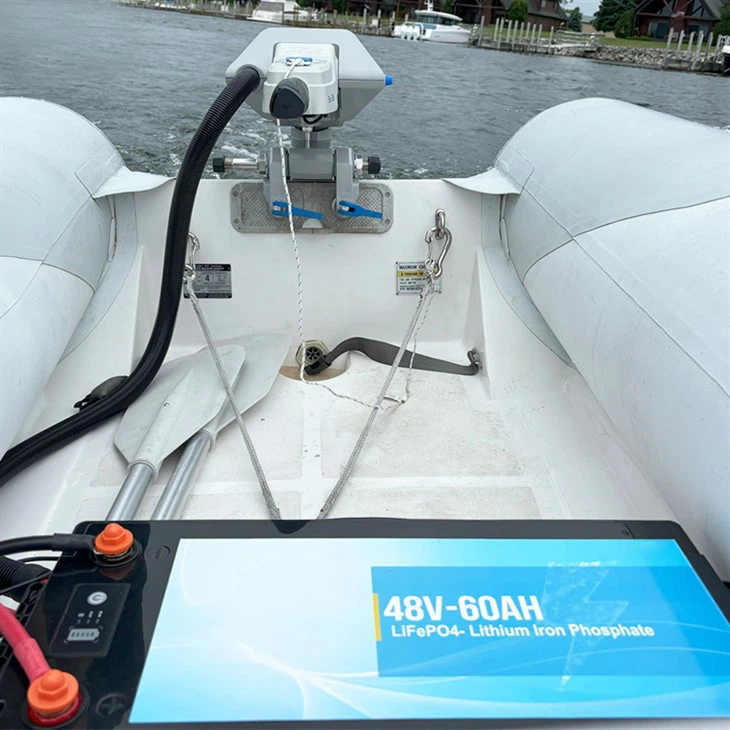

Impact of Temperature on Battery Performance
Capacity
Temperature has a direct impact on the capacity of a 48V LiFePO4 marine battery. As the temperature decreases, the available capacity of the battery also decreases. For example, at -20°C (-4°F), the battery may only be able to deliver 50% to 60% of its rated capacity. This means that if you are relying on the battery to power your marine equipment, you may experience a significant reduction in runtime.
Charging and Discharging Efficiency
The efficiency of charging and discharging a LiFePO4 battery is also affected by temperature. At low temperatures, the charging process becomes slower and less efficient. The battery may require more time to reach a full charge, and the charger may need to work harder to overcome the increased internal resistance. Similarly, during discharging, the battery may not be able to deliver power as efficiently, resulting in a lower output voltage.
Cycle Life
The cycle life of a battery refers to the number of charge and discharge cycles it can withstand before its capacity drops to a certain level. High temperatures can significantly reduce the cycle life of a 48V LiFePO4 marine battery. Each time the battery is exposed to elevated temperatures, the chemical reactions inside the battery cause more wear and tear on the components. This leads to a faster degradation of the battery, reducing its overall lifespan.
Managing Temperature in Marine Applications
To ensure the optimal performance and longevity of 48V LiFePO4 marine batteries, it is essential to manage the temperature effectively. Here are some strategies that can be employed:
Thermal Insulation
Using thermal insulation materials can help protect the battery from extreme temperatures. Insulating the battery compartment can reduce the impact of external temperature fluctuations, keeping the battery within the ideal operating range. This can be particularly useful in cold climates or when the battery is exposed to direct sunlight.
Cooling Systems
In high-temperature environments, installing a cooling system can help maintain the battery temperature within the safe range. Cooling systems can include fans, heat sinks, or liquid cooling systems. These systems work by dissipating the heat generated by the battery during charging and discharging, preventing overheating.
Monitoring and Control
Regularly monitoring the temperature of the battery is crucial. Many modern LiFePO4 batteries come with built-in temperature sensors that can provide real-time temperature data. By monitoring the temperature, you can take proactive measures to prevent the battery from operating outside the safe range. For example, if the temperature starts to rise above the recommended limit, you can reduce the charging or discharging rate or activate the cooling system.
Other Considerations for Marine Batteries
In addition to the 48V LiFePO4 marine battery, we also offer 12V LiFePO4 Marine Battery and 24V LiFePO4 Marine Battery options. These batteries have similar temperature requirements and performance characteristics, but they may be more suitable for different marine applications depending on the power needs of your equipment.
Conclusion
The operating temperature range of a 48V LiFePO4 marine battery is a crucial factor that affects its performance, safety, and lifespan. By understanding the ideal temperature range and the impact of temperature on battery performance, you can take the necessary steps to manage the temperature effectively. Whether you are using the battery for a small boat or a large marine vessel, proper temperature management is essential to ensure reliable and long-lasting power.
If you are interested in learning more about our 48V LiFePO4 marine batteries or other battery solutions for marine applications, please feel free to contact us. Our team of experts is ready to assist you in selecting the right battery for your needs and providing you with all the information you need to make an informed decision.
References
- Arora, P., Zhang, Z., & White, R. E. (1999). Comparison of Modeling Predictions with Experimental Data from Plastic Lithium Ion Cells. Journal of the Electrochemical Society, 146(4), 1484-1492.
- Dubarry, M., & Liaw, B. Y. (2009). A review of the features and analyses of the solid electrolyte interphase in Li-ion batteries. Journal of the Electrochemical Society, 156(12), A955-A969.
- Xu, K. (2004). Nonaqueous liquid electrolytes for lithium-based rechargeable batteries. Chemical Reviews, 104(10), 4303-4417.