

The battery capacity is a critical factor that significantly influences a boat's range. As a supplier of 48V Lifepo4 Marine Battery, I have witnessed firsthand how different battery capacities can lead to varying performance in marine applications. In this blog, we will explore the impact of battery capacity on a boat's range, delving into the underlying principles and practical considerations.
Understanding Battery Capacity
Battery capacity is typically measured in ampere - hours (Ah). It represents the amount of charge a battery can store and deliver over a specific period. For example, a 100Ah battery can theoretically supply a current of 1 ampere for 100 hours, or 10 amperes for 10 hours. In the context of marine batteries, a higher capacity battery means more energy is available to power the boat's electrical systems and propulsion.
The Relationship between Battery Capacity and Boat Range
The range of a boat refers to the distance it can travel on a single charge or fuel load. In electric boats, the battery is the primary source of power, and its capacity directly affects the range. The more energy the battery can store, the longer the boat can operate before needing to recharge.
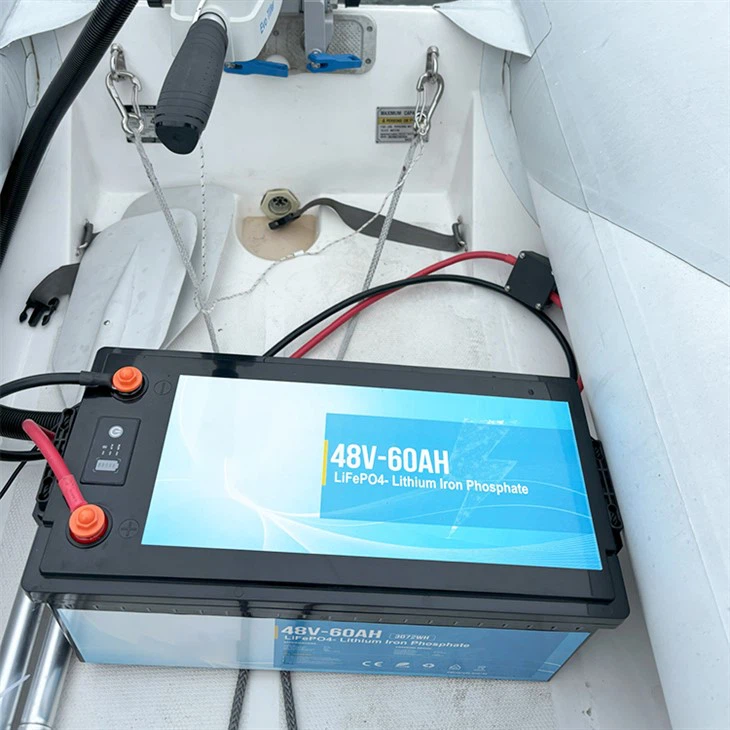
Let's consider a simple example. Suppose we have two identical electric boats, one equipped with a 12V Lifepo4 Marine Battery with a capacity of 50Ah and the other with a 48V Lifepo4 Marine Battery of 200Ah. Assuming the power consumption of the boats' propulsion systems is the same, the boat with the 200Ah 48V battery will have a much longer range. This is because it has four times the energy storage capacity of the 12V 50Ah battery.
Factors Affecting the Impact of Battery Capacity on Range
However, the relationship between battery capacity and boat range is not always straightforward. Several factors can influence how effectively the battery capacity translates into actual range.

Power Consumption
The power consumption of the boat's electrical systems and propulsion is a key factor. Boats with high - power motors, advanced navigation systems, and other electrical accessories will consume more energy. For instance, a speedboat with a powerful electric motor will drain the battery much faster than a small fishing boat with a low - power motor. Even if the speedboat has a large - capacity battery, its range may still be limited due to high power consumption.
Efficiency of the Propulsion System
The efficiency of the boat's propulsion system also plays a crucial role. A more efficient propulsion system can convert a higher percentage of the battery's energy into forward motion. This means that for the same battery capacity, a boat with a more efficient propulsion system will have a longer range. For example, some modern electric boats use advanced motor and propeller designs to improve efficiency, allowing them to travel further on the same amount of battery energy.
Boat Design and Load
The design of the boat, including its hull shape, weight, and drag coefficient, affects its energy requirements. A boat with a streamlined hull and low drag will require less energy to move through the water, resulting in better range. Additionally, the load on the boat, such as passengers and cargo, can increase the energy consumption. A heavily loaded boat will need more power to maintain speed, reducing the range even with a large - capacity battery.
Practical Considerations for Choosing the Right Battery Capacity
When choosing a marine battery for a boat, it is essential to consider the boat's intended use and requirements.
Recreational Boating
For recreational boating, such as day trips on a lake or coastal cruising, a battery with a moderate capacity may be sufficient. A 24V Lifepo4 Marine Battery with an appropriate capacity can power the boat's basic electrical systems and provide enough range for a day's outing. However, if you plan to go on longer trips or use power - hungry accessories, a higher - capacity 48V Lifepo4 Marine Battery may be a better choice.
Commercial Boating
Commercial boats, such as ferries or tour boats, often require large - capacity batteries to meet their long - distance and high - usage requirements. These boats typically operate for extended periods and may need to carry a significant number of passengers or cargo. In such cases, multiple high - capacity 48V Lifepo4 Marine Batteries may be connected in parallel or series to provide the necessary energy.
Benefits of Lifepo4 Marine Batteries
Lithium iron phosphate (Lifepo4) batteries offer several advantages over traditional lead - acid batteries in marine applications.
High Energy Density
Lifepo4 batteries have a higher energy density, which means they can store more energy in a smaller and lighter package. This is particularly beneficial for boats, as it reduces the weight and space requirements of the battery system. A lighter battery also means less energy is needed to move the boat, potentially increasing the range.
Long Cycle Life
Lifepo4 batteries have a much longer cycle life compared to lead - acid batteries. They can withstand a greater number of charge - discharge cycles without significant degradation in performance. This means that over the long term, Lifepo4 batteries can provide more reliable and consistent power, reducing the need for frequent battery replacements.
Fast Charging
Lifepo4 batteries can be charged at a faster rate than lead - acid batteries. This is an important advantage for boat owners, as it reduces the downtime between trips. A boat with a Lifepo4 battery can be recharged more quickly, allowing for more frequent use.
Conclusion
In conclusion, the battery capacity has a significant impact on a boat's range. A higher - capacity battery generally means more energy is available, which can potentially lead to a longer range. However, factors such as power consumption, propulsion system efficiency, and boat design also need to be considered. As a supplier of 48V Lifepo4 Marine Battery, we understand the importance of choosing the right battery for your boat. Whether you are a recreational boater or a commercial operator, selecting the appropriate battery capacity can enhance your boating experience and ensure reliable performance.
If you are interested in learning more about our marine batteries or would like to discuss your specific requirements, please feel free to reach out. We are ready to assist you in finding the best battery solution for your boat.
References
- "Marine Electrical Systems Handbook" by Nigel Calder
- "Electric Boats: Design, Construction, and Use" by John Harris